
Introduction
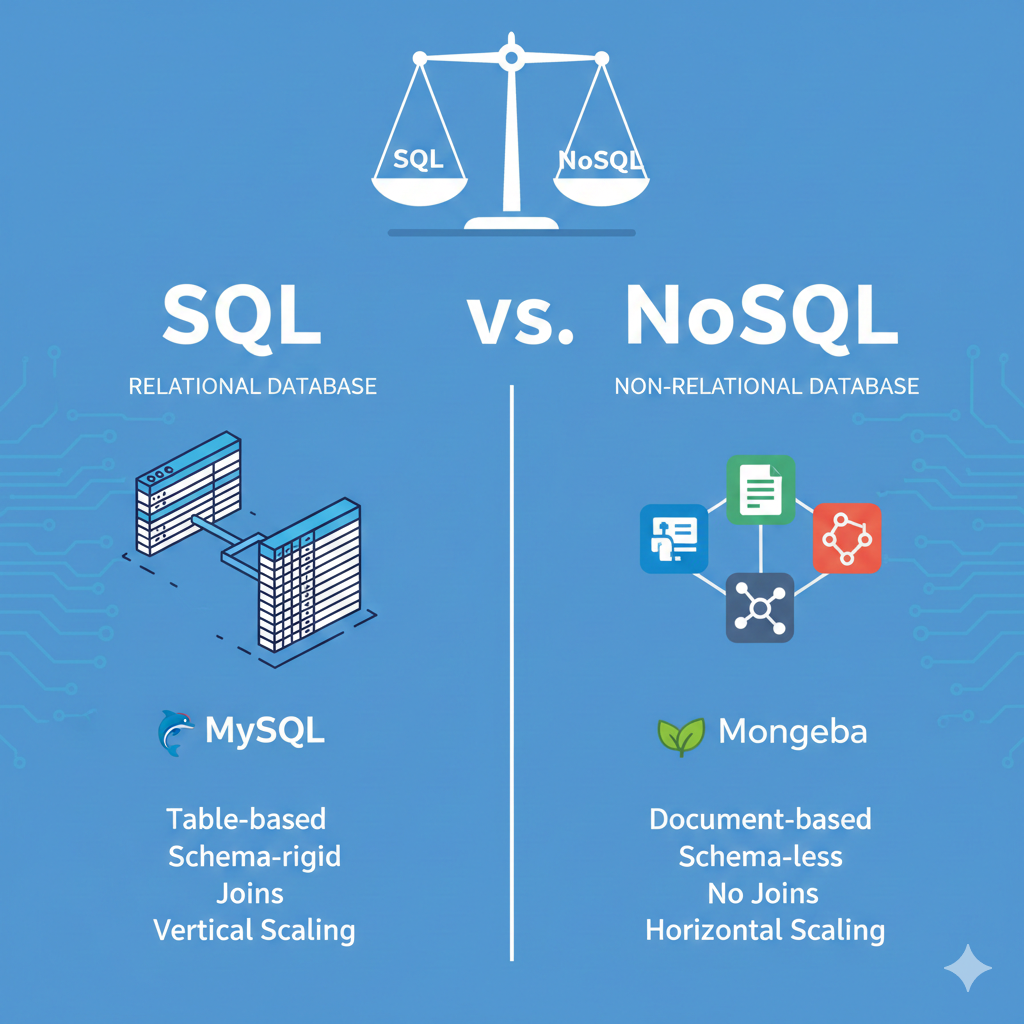
Databases play a crucial role in modern applications. When choosing a database, developers often face a common question — SQL vs NoSQL, which one is better?
In this article, we’ll explore the difference between SQL and NoSQL databases, understand their structure, advantages, disadvantages, and look at real-world examples to help you choose the right database for your project.
What is SQL Database?
SQL (Structured Query Language) databases are relational databases that store data in tables with rows and columns. They follow a predefined schema and use SQL for querying data.
Popular SQL Databases
- MySQL
- PostgreSQL
- Oracle
- SQL Server
Example (SQL Table)
-- Create a Users Table

CREATE TABLE users (
  id INT PRIMARY KEY,
  name VARCHAR(50),
  email VARCHAR(100)
);What is NoSQL Database?
NoSQL databases are non-relational databases designed for flexibility, scalability, and large volumes of data. They store data in formats like documents, key-value pairs, graphs, or columns.
Popular NoSQL Databases
- MongoDB
- Cassandra
- Redis
- Firebase
Example (MongoDB Document)
{
  "id": 1,
  "name": "Rahul",
  "email": "rahul@gmail.com"
}SQL vs NoSQL – Key Differences
| Feature | SQL | NoSQL |
|---|---|---|
| Database Type | Relational | Non-Relational |
| Schema | Fixed | Dynamic |
| Data Storage | Tables | Documents / Key-Value |
| Scalability | Vertical | Horizontal |
| Query Language | SQL | API / JSON-based |
| Best For | Structured Data | Unstructured Data |
Advantages of SQL
- Structured data management
- Strong consistency
- ACID compliance
- Ideal for complex queries
Advantages of NoSQL
- High scalability
- Flexible schema
- Faster for big data
- Ideal for real-time apps
When to Use SQL?
Use SQL databases when:
- Data is structured
- Strong relationships exist
- Transactions are critical
- Banking & ERP systems
When to Use NoSQL?
Use NoSQL databases when:
- Data is unstructured
- Large-scale applications
- High-speed performance required
- Social media & IoT apps
Real-World Example
E-commerce Website
- User data → SQL
- Product catalog → NoSQL
Social Media App
- User profiles → NoSQL
- Payment system → SQL
FAQ Section
❓ Is SQL better than NoSQL?
No, both serve different purposes. SQL is best for structured data, while NoSQL excels in scalability and flexibility.
❓ Can SQL and NoSQL be used together?
Yes, many modern applications use both databases for different components.
❓ Is MongoDB better than MySQL?
MongoDB is better for flexible data storage, while MySQL is better for structured relational data.
Conclusion
Choosing between SQL vs NoSQL depends on your project requirements. SQL databases provide structure and consistency, while NoSQL databases offer scalability and flexibility. Understanding their differences helps developers build efficient and scalable applications.
Other Articles
- SQL Tutorial for Beginners
- MongoDB Beginner Guide
- Database Courses
- Backend Development Roadmap
🎯 Want to master databases?
Join our Database & Backend Development Course and learn SQL, NoSQL, MySQL, MongoDB, and real-time projects.
Leave a Reply